_edited_edited_edited.png)
Silenced Voices (May 2026)
- Latesha Higgs
- Jul 10
- 4 min read


In October 1991, Anita Hill testified before the Senate Judiciary Committee regarding allegations of sexual harassment against then-Supreme Court nominee Clarence Thomas. Over the course of three nationally televised days, beginning October 11, Hill shared her experiences of working with Thomas at both the EEOC and the Department of Education during the 1980s. Despite her testimony, Clarence Thomas was confirmed to the Supreme Court on October 15, 1991, by a narrow 52–48 vote.
The hearings sparked a national conversation about workplace sexual harassment and inspired a record number of women to run for Congress. But in many ways, the hearings did something else too—they exposed how quickly a woman, especially a Black woman, could be vilified for speaking her truth.
Now pause for a second—this is not about politics. Stay with me.
I was 13 years old when Anita Hill testified. I was not old enough to vote, but I was old enough to understand that something significant was happening. I did not watch every moment of the hearings, but I saw enough to wonder why this woman was being attacked so viciously for telling her story.
For days, I watched television shows, news programs, and listened to radio hosts—both men and women—speak harshly about her. At that age, I could not fully grasp the political implications of what was happening, but I vividly remember admiring her courage. I remember seeing a woman stand firm in her truth despite intense public backlash. What struck me even more was that much of the criticism seemed to come from people who looked like her.
I repeatedly heard Black men and women argue that Anita Hill was being used by "white supremist systems" to stop a Black man from progressing. Fast forward to 2026, and that same man so many tried to defend is now, in the eyes of many, doing the very thing people accused Anita Hill of doing—standing in the way of progress for Black men and women through decisions that continue to impact millions of Americans. Whether people agree politically or not is beside the point. The point is, Anita Hill was ridiculed, dismissed, and attacked for speaking her truth about a man’s character, and I believe recent events have forced many people to revisit her words differently.
She was badly ridiculed for speaking her truth. And as I reflected on some of the Supreme Court’s recent rulings on voting rights, free speech, and civil procedure, I found myself thinking about Anita Hill all over again—the backlash she endured, the warnings she tried to give, and the price Black women, and women in general, often pay for refusing to stay silent or simply speaking truths that people would rather ignore.
As I reflected on those hearings recently, I could not stop thinking about the countless Black women who face backlash simply for speaking honestly—women whose voices, if heard instead of dismissed, might have protected relationships, opportunities, communities, and even lives.
But before I became angry at systems that often work overtime to silence women, particularly Black women, I found myself reflecting on something even more painful: some of the deepest attempts to silence my voice did not come from systems at all. They came from other women.
Women who looked like me. Women who understood struggle. Women who knew what it meant to fight to be seen and heard.
I thought about experiences in workplaces, schools, churches, social spaces, and even within families. I thought about moments where fear, insecurity, jealousy, anger, or unresolved hurt caused women to work harder to suppress another woman’s voice instead of supporting it.
And honestly? That kind of silencing cuts differently.
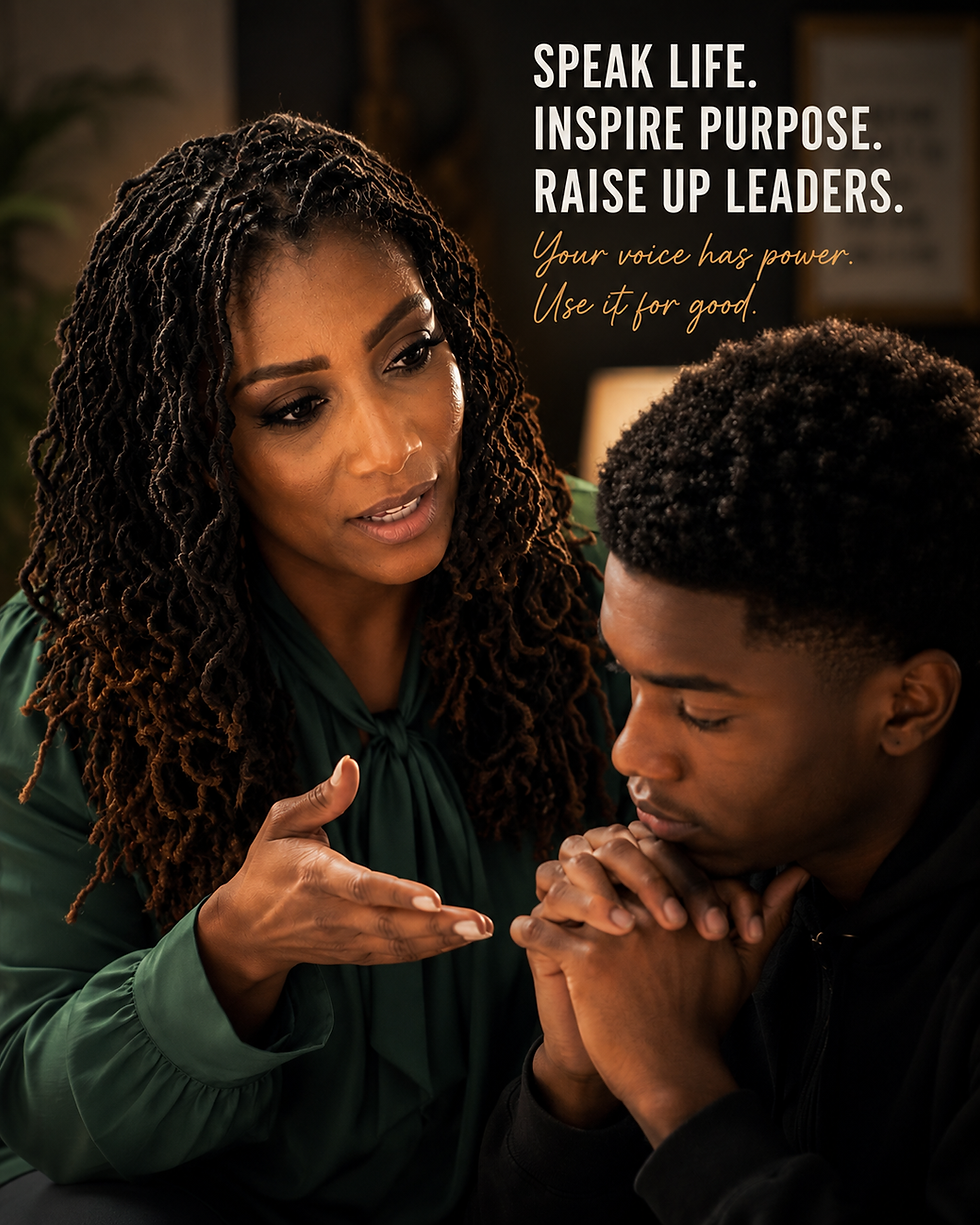
Because I have also witnessed the beauty and power Black women carry. I have seen our words breathe life into people. I have seen us strengthen our men, nurture children, build communities, encourage the brokenhearted, and redirect the lives of young people searching for purpose. Scripture reminds us in Proverbs 18:21 that “life and death are in the power of the tongue.” If our words hold that much power, why are we still using them against one another?
Why do “mean girl” mentalities still exist at ages where we absolutely should know better?
Why do gossip, envy, competition, and slander so often replace compassion, collaboration, accountability, and honest conversation?
Perhaps some women attempt to silence others because they understand just how powerful another woman’s voice can be. Perhaps insecurity convinces us there is not enough room for all of us to thrive. Perhaps some of us have spent so long surviving that we have forgotten how to genuinely support one another without viewing each other as competition.
But Black women do not have the luxury of tearing one another down.
At a time when many Black women are fighting to maintain leadership positions, economic stability, visibility, and opportunities in spaces that historically excluded us, this is not the season to isolate one another. This is not the season to weaponize our words against each other. This is not the season to silence one another’s voices.
This is the season to build.
To collaborate.
To heal.
To support.
To protect.
To honor one another’s gifts.
This is the season for us to truly become our sister’s keeper.

Comments